Percy Weasley
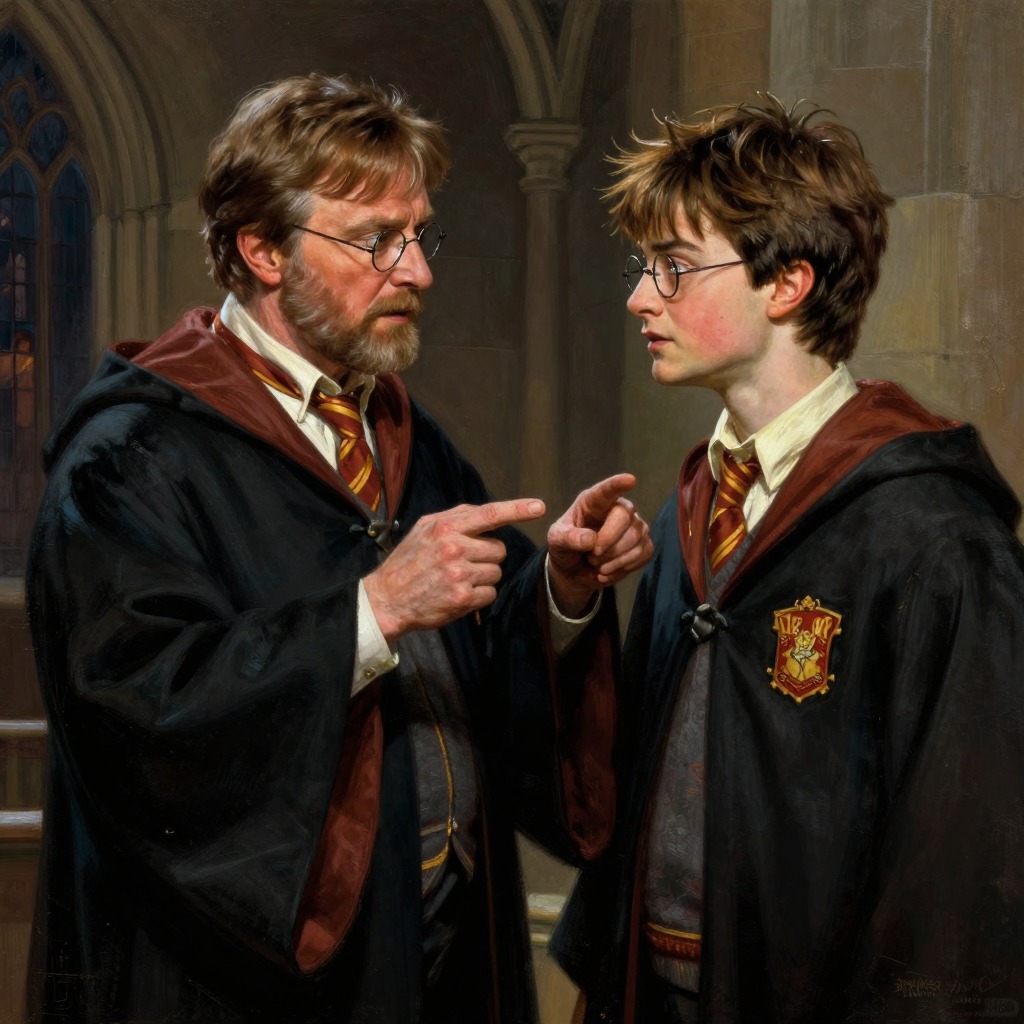
Percy Weasley, the third-eldest Weasley son, embodies the conflict between personal ambition and family loyalty in a time of war. His estrangement from the Weasleys, rooted in his refusal to believe in Lord Voldemort's return and his subsequent promotion within the Ministry of Magic, reaches a painful climax during a Christmas visit to the Burrow, where he arrives not as a son but as an aide to the new Minister. His silent, conflicted presence at Albus Dumbledore's funeral marks a tentative, wordless step back toward the family he had rejected, leaving his ultimate allegiance ambiguous but his isolation undeniable.
Ambition and Estrangement
Percy's rift with his family is a long-standing wound. By the start of this year, he has not spoken to his parents since falling out with them over his belief that the Ministry's denial of Voldemort's return was correct. Ron confirms to Harry that Percy is still not talking to his mum and dad, even though his father, Arthur, has been proven right all along about Voldemort being back. Hermione offers a sharp observation from Dumbledore, noting that people find it far easier to forgive others for being wrong than for being right, a sentiment that perfectly captures the stubborn pride that keeps Percy isolated. His absence from the Burrow at Christmas is noted with bitter humor by Fred, who asks if Percy is definitely not showing his ugly face, to which Mrs. Weasley turns away before answering that he is busy at the Ministry. The family's pain is palpable, and Percy's absence is a constant, unspoken presence.
The Christmas Confrontation
The estrangement becomes a public spectacle when Percy arrives at the Burrow on Christmas Day, not alone, but in the company of the newly appointed Minister of Magic, Rufus Scrimgeour. He strides across the snowy yard, his horn-rimmed glasses glinting, and the sight of him with the Minister shocks the family. Mrs. Weasley, overjoyed, throws herself into his arms, but Percy remains poker-straight and awkward, staring over everyone else's heads. He offers no greeting to his father, Fred, or George, who observe him with stony faces. Scrimgeour explains the visit as a chance for Percy to see his family, but the transparent purpose is to get the Minister alone with Harry. The tension is broken only when Percy, after a brief and uncomfortable stay, storms from the house with his glasses splattered with mashed parsnip, for which Fred, George, and Ginny all claim credit. This humiliating exit deepens the family's hurt and solidifies Percy's role as an outsider.
A Silent Return at the Funeral
Percy's final appearance in the book is at Dumbledore's funeral, a scene of profound grief and solemnity. He is no longer a visitor but part of the Ministry delegation, his red hair and horn-rimmed glasses visible among Scrimgeour's entourage. Ron gives no sign that he is aware of his brother's presence, other than stabbing pieces of kipper with unwonted venom at breakfast. Percy does not approach his family, nor does he speak to them. He remains a silent, distant figure, a Ministry man standing apart from the Weasleys. Yet his very presence at the funeral, a tribute to the man the Ministry had once vilified, suggests a crack in his rigid facade. He is there, bearing witness, a silent acknowledgment of a truth he had once denied. The narrative offers no reconciliation, no words of apology or forgiveness, only the stark image of a son standing apart from his family at the grave of the man who had been proven right all along. His future, whether he will fully return to the family or remain a servant of the Ministry, is left unresolved, a quiet testament to the enduring cost of pride and the slow, painful possibility of redemption.